CAL FIRE Report Identifies Overcrowded California Forests as Significant Risk Factor
A CAL FIRE report highlights that California's forests are overcrowded and consequently at risk.

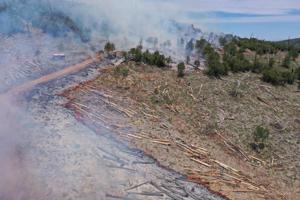
 Chico Redding, CA, November 5, 2026 — A recent report from the California Department of Forestry and Fire Protection (CAL FIRE) indicates that California’s forests are facing significant risks due to overcrowding. The report emphasizes that the density of trees and vegetation in many forested areas has reached a critical level, increasing their vulnerability.
This overcrowding is identified as a primary factor contributing to heightened risks across the state’s woodlands. While the report details the general condition of overcrowding and its associated risks, specific details regarding the exact nature of the risks, the timeline of the report’s findings, or particular geographic areas most affected were not explicitly provided in the summary. The report’s findings suggest that the dense nature of these forests can exacerbate the potential for widespread damage.
The specific causes leading to this overcrowding were not detailed in the summary, nor were any particular mitigation strategies or proposed solutions mentioned. Similarly, information about any specific incidents, fines, code violations, or permit statuses related to forest management that might be highlighted in the report was not made available. The contractor’s name was not provided, and the outcome of any inspections was not stated.
CAL FIRE’s findings underscore a crucial environmental concern for California, pointing to the density of forest ecosystems as a key area requiring attention. The full implications and any potential subsequent actions stemming from this report would depend on further details not present in the provided summary.
Further information regarding the report’s release date, the methodology used to assess forest density, and any recommendations for addressing the identified risks would provide a more comprehensive understanding of the situation. The summary provided focuses solely on the core finding: overcrowded forests pose a significant risk.
The summary does not include any direct quotes from CAL FIRE officials or any other individuals. Information about financial figures, such as potential costs associated with mitigation or damage, was also not provided. The report’s findings, as summarized, point to a general state of risk stemming from forest density.
The summary does not specify when this report was published or when the observations were made. It also does not mention any particular companies or individuals that may be involved in forest management or any potential violations that have been identified. The contractor’s name was not provided, and the inspection outcomes were not stated. The fine amounts were also not provided. What happened next is also not detailed.
The trend summary does not provide sufficient detail to elaborate on specific case studies, locations, or figures. The overarching theme is the identification of overcrowded forests as a critical risk factor in California, as highlighted by CAL FIRE. The report’s focus is on the condition of the forests and the inherent risks arising from their density. The contractor’s name was not provided, and the fine amounts were not provided. The summary does not include any specific dates, timelines, or locations, nor does it mention specific code violations or inspection outcomes. What happened next was not provided.
Story summarized from the original created by Robert Sheridan on www.actionnewsnow.com, see more information here.
Media gallery